
Back pain is something almost everyone experiences at some point. Sometimes it follows an obvious event—a heavy lift, a fall, a new workout or an awkward movement. Other times, it seems to appear out of nowhere.
But one thing Dr. Glenn Guilderson often tells patients at Back to Health Chiropractic & Wellness is that the moment you feel back pain may not be the moment the problem started.
When you feel pain, is that when the problem began?
Not necessarily.
The body is remarkably good at compensating. When one area isn’t moving or functioning as well as it should, other parts of the body may adapt and take on additional work.
You may not notice anything at first.
Over time, however, the body’s ability to compensate can become limited. Eventually, you may begin to experience pain, stiffness or a noticeable change in how you move.
In other words, pain can sometimes be the point at which the body is no longer able to compensate—not necessarily the point at which the underlying problem began.
This is one reason Dr. Glenn believes there can be value in having your spine and musculoskeletal system assessed before you are experiencing significant pain. A chiropractic assessment can look at movement, joint function, range of motion and other factors that may help identify areas that aren’t functioning as they should.
Preventive care doesn’t mean that everyone needs regular treatment regardless of symptoms. Rather, it means paying attention to how your body is moving and addressing problems early when appropriate.
When should you see a chiropractor for back pain?
If back pain is interfering with your normal activities, sleep, work, exercise or the things you enjoy, it’s reasonable to have it assessed rather than simply hoping it goes away.
An assessment can also be helpful when pain keeps returning, when your movement has changed, or when you notice increasing stiffness or difficulty performing activities that were previously comfortable.
Back pain can have many different causes, and not every case requires the same approach. That’s why the assessment is an important first step.
What happens during a chiropractic assessment?
A first appointment typically begins with a detailed health history and examination. Your chiropractor will want to understand your symptoms, your activities, your medical history and what you are hoping to accomplish.
They may assess areas such as:
- Range of motion
- Joint movement
- Muscle function
- Posture and movement patterns
- The spine and surrounding joints
- How different parts of the body may be contributing to your symptoms
The goal is to understand what may be contributing to the problem and develop an appropriate plan of care. Chiropractors are trained to assess, diagnose and manage musculoskeletal conditions, and treatment plans can include hands-on care, education, exercise and self-management strategies.
Can a chiropractor order X-rays?
Sometimes imaging is appropriate, but it isn’t necessary for every person with back pain.
When a chiropractor determines that diagnostic imaging is clinically indicated, they may recommend or arrange appropriate imaging as permitted within their scope of practice. Chiropractors receive training in radiographic assessment as part of their professional education, but current clinical guidance recommends imaging when there is a specific clinical reason for it rather than simply as a routine part of every back-pain assessment.
The important point is that imaging should be used when it can add meaningful information to the assessment and help guide appropriate care.
Exercise can be part of your chiropractic care
Chiropractic care isn’t necessarily just about what happens on the treatment table.
Depending on your individual assessment and goals, your chiropractor may recommend exercises, stretches, activity modifications or other strategies to help you improve movement and manage your condition between appointments.
At Back to Health, the goal is to help patients understand their bodies and participate in their own care—not simply rely on treatment in the clinic.
Exercise and self-management strategies are recognized components of chiropractic care plans, alongside manual therapies where appropriate.
Chiropractic can work alongside other healthcare
Healthcare doesn’t have to be an either/or decision.
At Back to Health Chiropractic & Wellness, chiropractic care is part of a multidisciplinary environment that includes osteopathy, massage therapy, acupuncture and psychology.
Different practitioners bring different approaches and areas of expertise. Depending on a patient’s needs, these services may complement one another and can be part of a broader approach to health and wellness.
Collaboration and appropriate referral between healthcare professionals are important parts of patient-centred care.
Do you need a doctor’s referral to see a chiropractor?
No. In Canada, chiropractors are primary-contact healthcare professionals, so you do not need a doctor’s referral to make an appointment with a chiropractor.
Chiropractic is also a highly trained healthcare profession. In Canada, the typical educational pathway includes at least three years of undergraduate study followed by a four-year Doctor of Chiropractic program, along with the examinations and licensing requirements needed to practise.
That means chiropractors receive extensive education in areas including anatomy, physiology, pathology, biomechanics, diagnosis, rehabilitation and hands-on clinical care.
When should you seek medical attention?
Most back pain is not an emergency, but certain symptoms require prompt medical assessment.
Seek medical attention if back pain follows significant trauma or is accompanied by concerning symptoms such as new or progressive neurological changes, problems with bladder or bowel control, or unexplained things happening
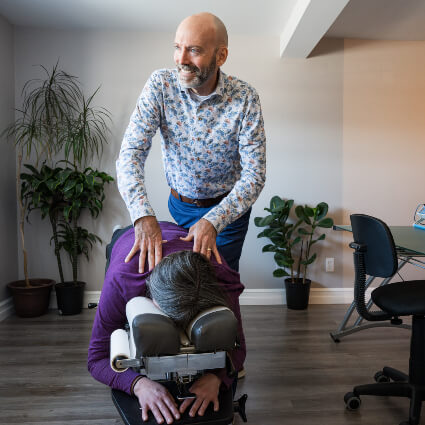
Dr. Glenn at work
in the body.
If your symptoms are severe, worsening or unusual for you, it is important to speak with an appropriate healthcare professional rather than assuming chiropractic care is the right approach.
Why choose Back to Health Chiropractic & Wellness?
Back to Health has been part of the Lower Sackville community for more than 20 years.
Our team includes chiropractors, an osteopath, massage therapists, an acupuncturist and a psychologist, allowing patients to access different approaches to care in one location.
For Dr. Glenn, chiropractic care starts with understanding the person in front of him—not simply treating the spot that hurts.
Because sometimes, where you feel the pain isn’t necessarily where the problem began.
And sometimes, the best time to have your spine assessed isn’t when you’re already hurting.
If you’re experiencing back pain, stiffness or changes in how you move—or you’re simply wondering whether a chiropractic assessment could be appropriate for you—give Back to Health Chiropractic & Wellness a call. Our team is happy to answer your questions and help you determine the next step.
Back to Health Chiropractic & Wellness
271 Sackville Drive
Lower Sackville, Nova Scotia
902-865-8500
backtohealthchiropractic.ca
Serving Lower Sackville and surrounding communities.